Texas Metros · Head-to-Head
San Antonio or Fort Worth for retirement?
Same state, same tax code, same property tax rate, same insurance estimate, same brutal summer. Across all ten scored dimensions, these two cities are never more than a single point apart. That is unusual, and it means the decision gets made on things a scorecard cannot settle. Here is the honest version.
The short version
Choose Fort Worth for two things San Antonio cannot match: DFW International, twenty minutes east on American Airlines' largest base, a perfect 10 of 10 for airport access, and the Cultural District, where the Kimbell, the Modern, and the Amon Carter sit on one boulevard with two of the three free to walk into. Add the Stockyards, Sundance Square, and a $300,000 typical home value. Choose San Antonio for depth that took three hundred years to accumulate: a UNESCO World Heritage mission chain, the only one in Texas, a UNESCO Creative City of Gastronomy designation, the River Walk and the eight-mile Mission Reach, a teaching hospital in University Hospital and UT Health San Antonio, and inner-loop municipalities like Alamo Heights and Terrell Hills that run like small towns inside a big city. It also scores a point better on tax friendliness, safety, community, and warm winters. The summer is the same on both sides, and it is the honest dealbreaker for both.
The scored comparison
Both cities scored the same way, on the same ten dimensions. The pattern is the story: five dimensions are exact ties, and the other five are one-point gaps. San Antonio takes four of those, Fort Worth takes one, and none of them is wide enough to decide anything on its own.
| Metric | San Antonio TEXAS | Fort Worth TEXAS |
|---|---|---|
| Cost & money | ||
| Typical home value (citywide) | $251,000 ✓ | $300,000 |
| Estimated retiree budget | $4,700–$5,800/mo ✓ | $5,000–$6,200/mo |
| Budget tier (1 = least expensive) | 1 of 5 ✓ | 2 of 5 |
| Property tax rate | 1.40% | 1.40% |
| Home insurance estimate | $4,085/yr | $4,085/yr |
| Our 10-dimension scores | ||
| D1 Airport access | 9/10 | 10/10 |
| D2 Budget | 8/10 | 7/10 |
| D3 Healthcare | 8/10 | 8/10 |
| D4 Climate resilience & insurance | 5/10 | 5/10 |
| D5 Tax friendliness | 9/10 | 8/10 |
| D6 Walkability | 5/10 | 5/10 |
| D7 Outdoor recreation | 5/10 | 4/10 |
| D8 Active wellness | 6/10 | 6/10 |
| D9 Safety | 7/10 | 6/10 |
| D10 Community & culture | 8/10 | 7/10 |
| Climate | ||
| Warm winters | 7/10 | 6/10 |
| Summer comfort (higher = milder) | 3/10 | 3/10 |
| Humidity (lower = drier) | 8/10 | 7/10 |
| Extreme heat exposure (lower = less) | 9/10 | 9/10 |
Scored 0–10 across every city on RetireMeHere; higher is better except where noted. Checkmarks mark the stronger city where a row separates them meaningfully, and no row here does: every scored gap is a single point or a tie, so the table is left unmarked. Property tax and insurance figures are Texas state-average estimates; county effective rates vary meaningfully, and Bexar and Tarrant County bills commonly run higher before homestead and over-65 exemptions are applied. San Antonio's cost, walkability, and safety scores reflect retiree-target neighborhoods rather than citywide averages; see the discussion below. Data: RetireMeHere city database, July 2026.
The five tradeoffs that actually decide it
1. The airport is the cleanest practical difference on the board.
Fort Worth scores a perfect 10 of 10 on airport access, and it is not a technicality. DFW International sits twenty minutes east, it is American Airlines' largest base, and it flies nonstop to nearly everywhere, including most of the international routes a retiree would want without a connection. San Antonio scores 9 of 10, which is genuinely good and closer in: SAT is eight miles from downtown, twelve airlines, 48 nonstop destinations across the United States, Mexico, and Canada. The gap on paper is one point. The gap in practice depends entirely on how you travel. If your flying is domestic and periodic, SAT's proximity is arguably the better daily deal. If you fly internationally, connect often, or have family in a hard-to-reach city, DFW is a category above and worth the twenty-minute drive.
2. Two serious cultural arguments, built on entirely different foundations.
San Antonio scores 8 of 10 on community and culture, Fort Worth 7 of 10, and the one-point gap tells you almost nothing about how different they feel. Fort Worth bought its culture at the top of the market and it shows. The Cultural District puts the Kimbell (Louis Kahn), the Modern (Tadao Ando), and the Amon Carter (Philip Johnson) within a walk of each other on Camp Bowie Boulevard, the Kimbell and the Amon Carter free to enter, with Bass Performance Hall downtown and the Van Cliburn International Piano Competition on the calendar. San Antonio's culture was not purchased; it accumulated. Five Spanish missions along the river, four of them still working parish churches, inscribed as the only UNESCO World Heritage Site in Texas. A UNESCO Creative City of Gastronomy designation, one of only two in the country. The Tobin Center on the river, the McNay, the Witte, the Pearl, Market Square, and eleven days of Fiesta every April. One city gives you a museum row a city ten times its size would envy. The other gives you three hundred years of continuous lived culture in which the Mexican-American calendar is the mainstream rather than a district.
3. San Antonio wins the cost rows, and the neighborhood bands take it back.
San Antonio is the cheaper city on paper and by a real margin: $251,000 citywide against Fort Worth's $300,000, a $49,000 gap that puts it a full budget tier lower (1 of 5 against 2 of 5), with the monthly retiree estimate running $300 to $400 lighter ($4,700–$5,800 against $5,000–$6,200). The property tax rate and insurance estimate are the same figure on both sides. None of that is the number to plan on. Both cities are physically enormous, and in both cases the citywide median averages across territory retirees will never shop. Fort Worth retirees concentrate in Fairmount and the Near Southside ($350K to $550K, restored Craftsman bungalows and the most genuinely walkable in-town option), Tanglewood and TCU-Westcliff ($500K to $800K and up), Mira Vista and the southwest golf neighborhoods ($500K to $900K and up), or the newer Alliance corridor to the north ($350K to $500K). San Antonio retirees concentrate in King William ($400K to $600K, Victorian, walkable to Southtown and the River Walk), Stone Oak (around $525K, newest construction and the most house per dollar), Alamo Heights (around $700K), Olmos Park ($730K and up), and Terrell Hills (around $880K). The bands overlap almost exactly, which is where San Antonio's $49,000 citywide advantage goes: it is a fact about the territory each city averages over, not about what a retiree pays. The one durable edge: Fort Worth's cheapest genuinely walkable historic option starts lower than San Antonio's.
4. The safety row is real, but the two numbers are not built the same way.
San Antonio scores 7 of 10 and Fort Worth 6 of 10, and reading that as "San Antonio is safer" would be a mistake. San Antonio is scored on its retiree-target areas, and several of those are not San Antonio at all in the governing sense: Alamo Heights, Olmos Park, and Terrell Hills are independent municipalities entirely surrounded by the city, each with its own police department, sitting alongside Stone Oak on the north side and the King William historic district. San Antonio's citywide statistics are considerably worse than the 7 implies, and the citywide numbers are what a search result hands you. Fort Worth's 6 is a citywide figure with less distance between the headline and the neighborhood. The honest read: both cities reward retirees who choose the neighborhood deliberately, and San Antonio punishes those who don't more sharply, because the gap between its worst blocks and its retiree enclaves is wider. In either city, drive it in weekday traffic and walk it at night before you sign.
5. The summer is identical, and it is the reason most people rule out both.
Both cities score 3 of 10 on summer comfort and 9 of 10 on extreme heat exposure. June into September is an indoor season with early-morning errands in San Antonio, and North Texas runs stretches of 100°F-plus days from June into September with humidity layered on top. That is four months, not four weeks, and it is the single most common reason retirees leave either city. The differences are all on the mild end of the year: San Antonio scores 7 of 10 on warm winters against Fort Worth's 6, with a January mean of 52°F against 47°F and effectively no snow against Fort Worth's two inches a year. Fort Worth is marginally drier (humidity 7 against San Antonio's 8). Severe weather is a wash on the scorecard, both at 5 of 10 for climate resilience and the same $4,085 insurance estimate, but the risks differ in kind: Fort Worth sits on the fringe of Tornado Alley with severe hail and spring wind, while San Antonio's defining exposure is flash flooding, which is why checking a lot's position relative to the creeks and drainage is standard practice there. If the Texas summer is a dealbreaker, it is a dealbreaker twice over. Neither city is a hedge against the other.
Go deeper on each city
Full editorial profiles: neighborhoods, healthcare, a typical week, and the honest fit lists.
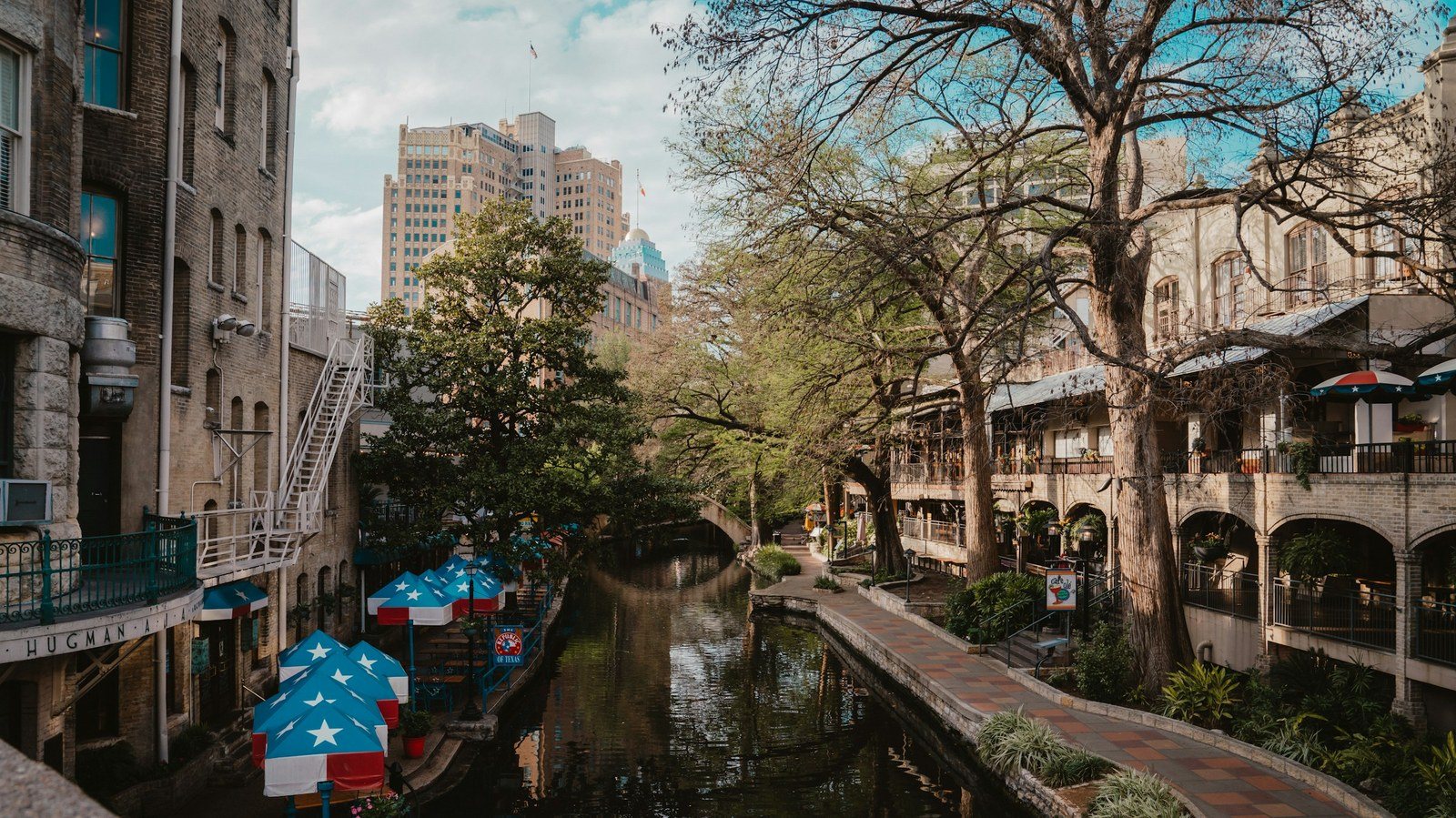
A big city that behaves like an old one: a UNESCO World Heritage mission chain, a UNESCO gastronomy designation, a teaching hospital, and no state income tax on any of it.
Read the San Antonio profile →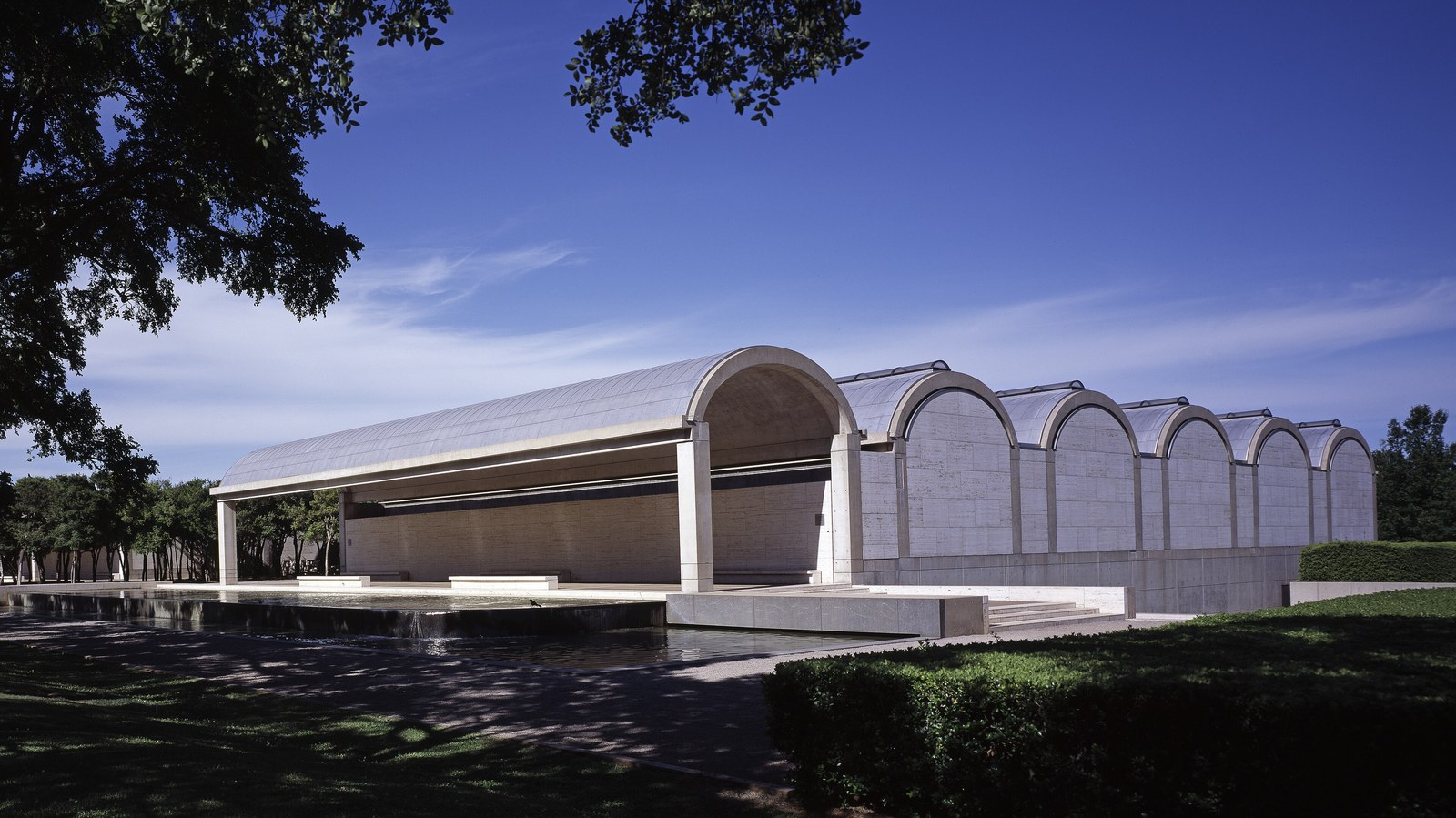
Cowtown and high culture in one zip code: a working twice-daily cattle drive, three world-class art museums on one boulevard, and DFW twenty minutes east.
Read the Fort Worth profile →San Antonio vs. Fort Worth for retirees: the questions people actually ask
Is San Antonio or Fort Worth better for retirement?
Neither wins by much, and that is the finding. Across all ten scored dimensions the two cities are never more than a single point apart, and four of the ten are exact ties: healthcare, climate resilience, walkability, and active wellness. San Antonio takes budget, tax friendliness, outdoor recreation, safety, and community by one point each. Fort Worth takes airport access by one point. The property tax rate and the home insurance estimate are identical to the dollar, and San Antonio's citywide typical home value sits $49,000 below Fort Worth's, which puts it a budget tier lower. The decision is still largely qualitative: Fort Worth for DFW twenty minutes east and three world-class art museums on one boulevard, San Antonio for three centuries of accumulated culture, a teaching hospital, and inner-loop municipalities that run like small towns inside a big city.
How does the cost of living compare between San Antonio and Fort Worth?
San Antonio is cheaper citywide, and the neighborhood bands close it. The typical citywide home value is $251,000 in San Antonio against $300,000 in Fort Worth, a $49,000 difference that puts San Antonio in Budget Tier 1 of 5 against Fort Worth's Tier 2. Estimated retiree budgets run $4,700 to $5,800 a month in San Antonio and $5,000 to $6,200 in Fort Worth. The property tax rate and the home insurance estimate are the same on both sides. The number that matters more than either citywide figure is the realistic neighborhood buy-in, and those bands overlap almost exactly: Fort Worth retirees typically land in Fairmount and the Near Southside at $350K to $550K, Tanglewood and TCU-Westcliff at $500K to $800K and up, or Mira Vista at $500K to $900K and up. San Antonio retirees concentrate in King William at roughly $400K to $600K, Stone Oak around $525K, Alamo Heights around $700K, and Terrell Hills around $880K. Build the budget around the neighborhood, not the citywide median: the citywide gap favors San Antonio and the neighborhood bands do not.
Which has better healthcare, San Antonio or Fort Worth?
Both score 8 of 10, and they earn it in opposite ways. San Antonio has the depth in the city itself: University Hospital is the Level I trauma center for South Texas and the primary teaching hospital of UT Health San Antonio, whose Mays Cancer Center holds National Cancer Institute designation, with Methodist Hospital ranked among the top ten in Texas in the 2025-26 U.S. News rankings and Brooke Army Medical Center adding another layer for military retirees. Fort Worth has strong local care plus an unusually short drive to elite care: Texas Health Harris Methodist Hospital Fort Worth is a Level I trauma center with comprehensive stroke and cardiac certifications, Baylor Scott and White All Saints adds a full-service hospital near downtown, and UT Southwestern in Dallas sits twenty to forty minutes east. San Antonio owns its academic depth; Fort Worth borrows Dallas's. For most retiree care, either is well above average.
Is the weather different between San Antonio and Fort Worth?
Not in the way that matters. Both cities score 3 of 10 on summer comfort and 9 of 10 on extreme heat exposure, which is to say the summer is long, hot, and the single most common reason retirees rule either city out. The differences are all on the winter side: San Antonio scores 7 of 10 on warm winters against Fort Worth's 6, with a January mean of 52°F against 47°F and essentially no snow against Fort Worth's 2 inches a year. Both cities score 5 of 10 on climate resilience and carry the same $4,085 annual home insurance estimate, though the underlying risks differ: Fort Worth sits on the fringe of Tornado Alley with severe hail and wind, while San Antonio's main exposure is flash flooding, along with hail and heat. Neither city is a hedge against the other on summer heat.
Is San Antonio or Fort Worth safer for retirees?
San Antonio scores 7 of 10 against Fort Worth's 6, but the two numbers are not built the same way and should not be read as a straight comparison. San Antonio is scored on its retiree-target areas, several of which are independent municipalities with their own police departments: Alamo Heights, Olmos Park, and Terrell Hills, along with Stone Oak on the north side and the King William historic district. San Antonio's citywide statistics are considerably worse than that score suggests, and they are what a search result will show. Fort Worth's 6 is a citywide figure with less spread behind it. The practical takeaway is the same in both cities and more urgent in San Antonio: choose the neighborhood deliberately rather than buying on a map, and walk the block at night before signing anything.
More city matchups
Still deciding?